






.png)









Jul 9, 2026
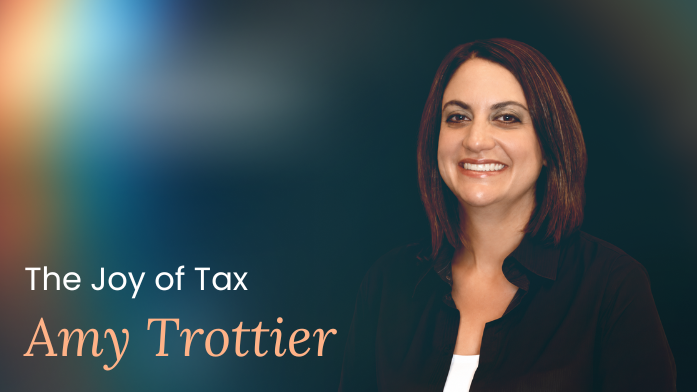
Amy Trottier on the Joy of Tax
Part of our Joy of Tax series: Gelt CPA Amy Trottier on 25 years of tax work, why strategy shouldn't be a back-burner item, and the client whose S-corp made less sense than an LLC once she ran the numbers.

Overview
- After more than twenty-five years, what keeps Amy in tax is that nothing repeats: every client, situation, and year is different.
- Her mother nudged her toward an accounting class; she loved it from the very first one and never looked back.
- At Gelt, strategy isn't a back-burner item: the team walks through every step and possibility, then helps implement.
- One client's inherited S-corp setup didn't actually fit; running the numbers showed an LLC made more sense.
Part of our Joy of Tax series, where we sit down with the CPAs of Gelt to talk about what makes this work matter.
Most people would rather do almost anything than think about their taxes. Amy Trottier built a career out of it, and after more than twenty-five years, the thing that keeps her in it is the one thing you might not expect: nothing ever repeats.
"I think I like taxes so much because it's never the same thing twice," she says. "Every client is unique, every situation is unique, and from year to year things can change. It's fun to be able to approach those different situations and find solutions for people to help them save as much as they can."
Watch the clip below for the Joy of Tax in her own words, then read on.
How she got here
Amy didn't set out to become a CPA. The push came from her mother.
"I wasn't really sure what I wanted to do when I was done with high school. She thought I would be good at accounting, so she suggested I take a class." That was all it took. "I loved it right away from the very first class and just kept going from there."
Twenty-five years later, the reactions she gets when she tells people what she does still fall into two camps. "Either they're completely disinterested because they don't even want to think about taxes, or they have some sort of problem that they want me to help them figure out." She understands both. "Taxes can't always be a fun thing for other people. But I do enjoy helping people out if they have questions."
The Gelt difference: strategy isn't the back burner
Ask Amy what makes Gelt different after a career spent at other firms, and her answer is immediate: the commitment to planning.
"I have worked at other firms in the past, and strategy has always been kind of a back burner thing. If we happened to have time for it at some point during the year, you might have one meeting about it," she says. "But here at Gelt, we make sure we go through all the steps of strategy planning. We hit all of the possibilities so that you have good information to make your decisions on. And we help you through the process of implementing those strategies as well."
That last part matters to her. "I think that's something that you really don't see with a lot of other CPAs."
[cta_block]
When the conventional answer is the wrong one
Amy's favorite recent win is a good example of what happens when you actually run the numbers instead of inheriting an assumption.
A client came to her already set up as an S corporation, a structure a previous CPA had told them was the best route. But as Amy dug into their actual situation, the location and entity type told a different story. "Being an S corporation didn't necessarily make sense for them."
So she did the work. The team compared the numbers of operating as an S corporation, the income and payroll taxes involved, against operating as an LLC and paying self-employment taxes instead. "In their specific case it made more sense to be the LLC."
That runs against the usual playbook, and Amy is careful not to oversell the exception. "Probably eighty-five, ninety percent of the time an S corporation is going to make sense. But it's not always the answer for everyone." The point isn't the LLC. The point is refusing to assume, and checking the math for the person in front of you.
Frequently Asked Questions
Is an S corporation always the best structure?
No. As Amy puts it, an S corporation makes sense probably eighty-five to ninety percent of the time, but it's not the answer for everyone. Location, entity type, and the actual numbers can tip the math toward an LLC, which is why the comparison is worth running for your specific situation.
What does real tax strategy planning look like?
Not one back-burner meeting a year. At Gelt, the team goes through all the steps of strategy planning, covers the full range of possibilities so you can make informed decisions, and then helps you implement the strategies you choose.
How do I know if my current structure still fits?
Run the numbers instead of inheriting the assumption. Compare the income and payroll taxes of operating as an S corporation against operating as an LLC and paying self-employment taxes. Situations change from year to year, so a structure that once made sense may not anymore.
Related Resources
Aug 21, 2026
The Oil and Gas Deduction, Explained: How Drilling Investments Can Offset Ordinary Income
From our webinar with King Operating: how oil and gas investments can create a large first-year deduction against ordinary income, why structure decides everything, and the catch when you exit.

Jul 28, 2026
Hiring a Caregiver Directly: How Families Legally Cut Senior Care Costs by Tens of Thousands
Hiring a caregiver directly instead of through an agency can save families $20,000 to $40,000 a year. HomePay and Gelt break down the household employment rules, tax breaks, and planning moves that make the direct hire model work.
