









.webp)











Aug 24, 2025
California LLC → Colorado LLC Conversion
Step-by-step guide to convert your California LLC to a Colorado LLC with forms, fees, and filing instructions.

Overview
So, you’re thinking about doing business in a new state…
If your LLC is relocating or conducting business in a new state, you’re probably required to register to do business in that state.
🔑 Key Terms:
Domestic registration: the state where your entity is formed. Also known as:
• State of formation
• State of organization
• State of incorporation
Foreign registration: a state other than your domestic state, where your entity is authorized to do business. Also known as:
• Foreign qualification
If you want to change your state of formation, you have a few options:
- Dissolve your LLC in the original state, and form a new LLC in the new state
- Form a new LLC in the new state, and merge the original LLC into it, or
- Complete a statutory conversion or domestication
A statutory conversion or domestication is usually the easiest way to change your state of formation in terms of cost, legal complexity and effort, but this option is not available in all states.
California LLC → Colorado LLC
The steps to complete a conversion of a California LLC to a Colorado LLC are outlined below.
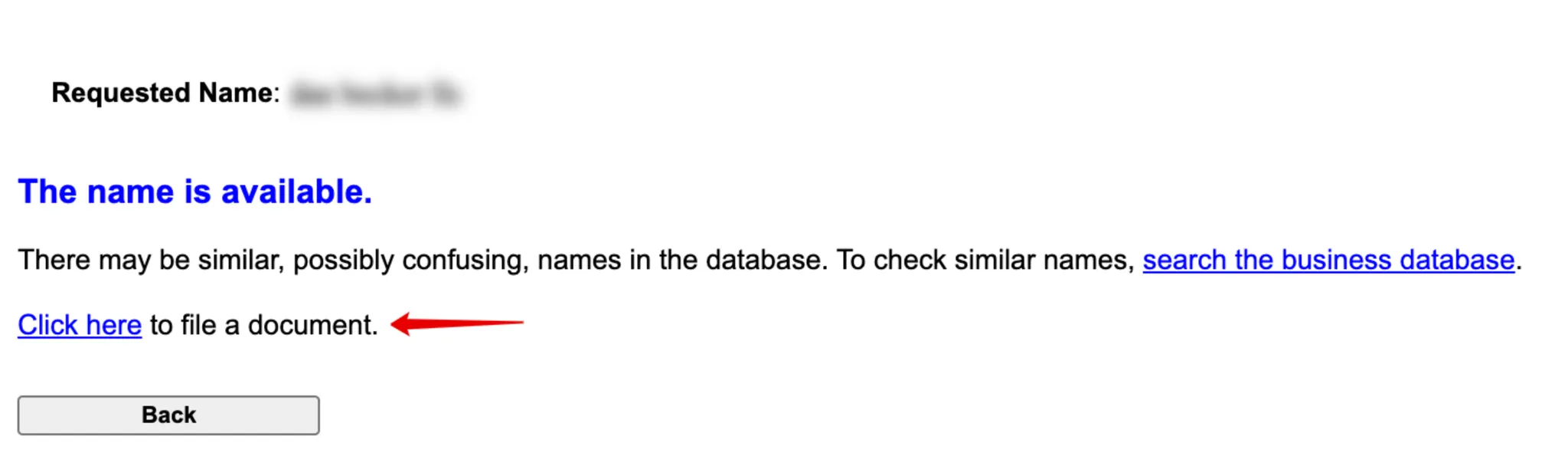
- Use the Colorado name availability search to confirm the entity name you will be using in Colorado is available
- If your desired name is available, you’re ready to file a document
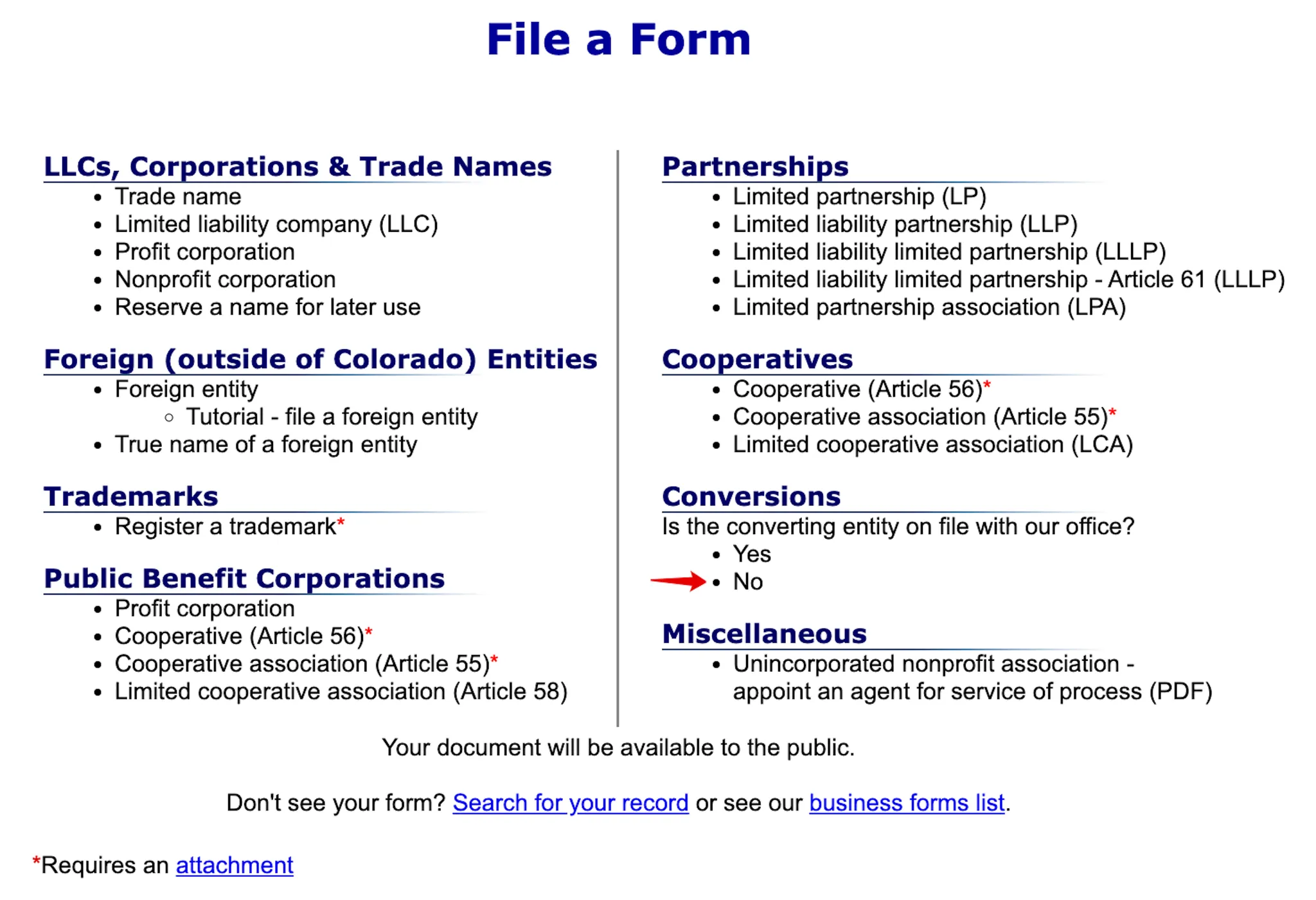
- Select the form you would like to complete
- File a conversion
- If your converting entity is not currently registered with the Colorado Secretary of State, select No
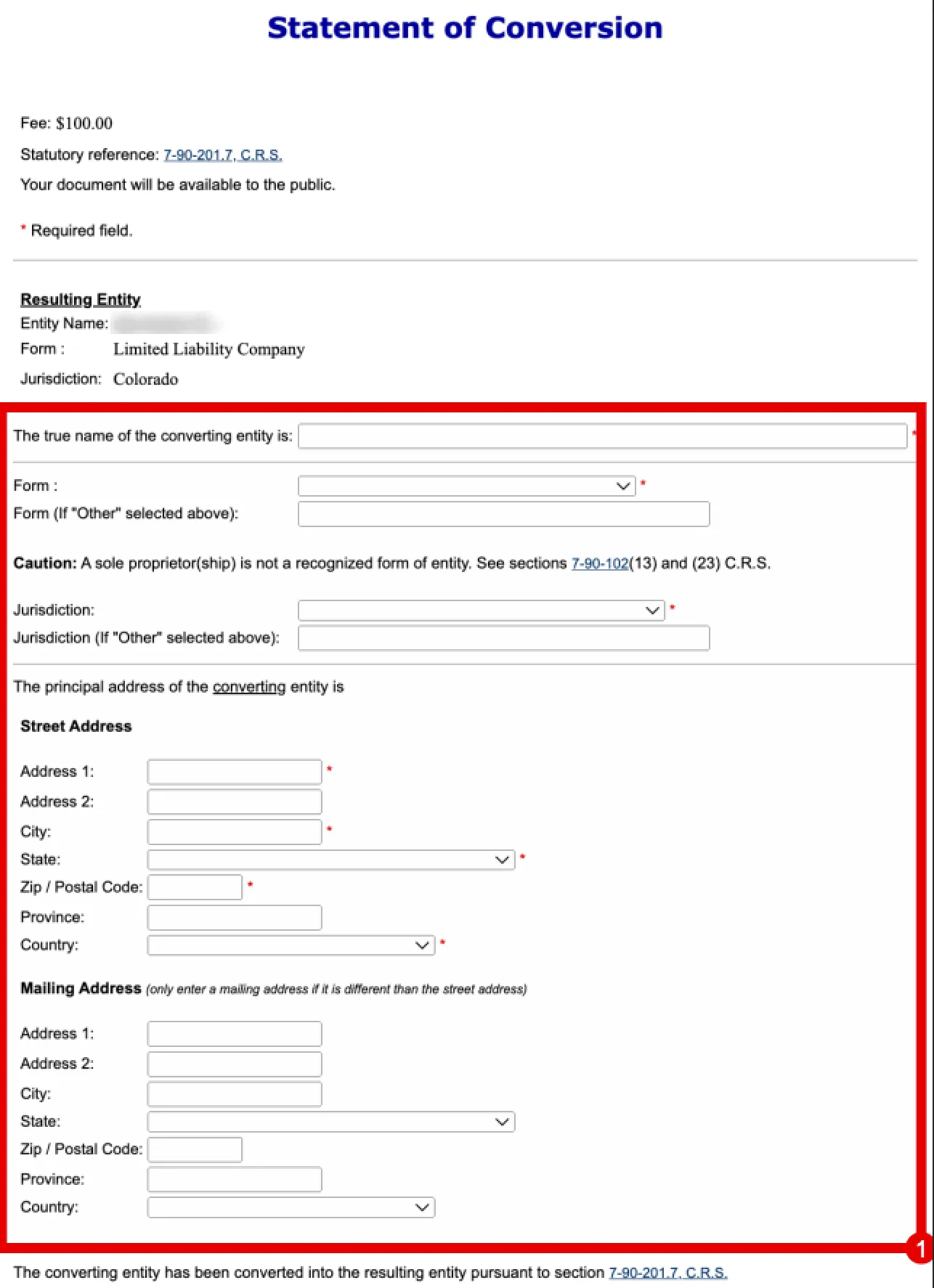
- Enter information about your converting entity to complete the Statement of Conversion
- Detailed instructions can be found here
- $100 filing fee can be paid online
Note: your converting entity is a California LLC, and your resulting entity will be a Colorado LLC
- Complete California Certificate of Conversion (Form CONV-1A)
- This form can be completed online using the link above, but will be submitted by mailBe sure to include the Submission Cover Sheet with your filing
- Detailed instructions for individual line items can be found here
- $30 filing fee will need to be submitted with your filing.Your check should be payable to CA Secretary of State
- To submit, mail your completed form to: Secretary of State, Document Filing Support Unit1500 11th Street, 3rd FloorSacramento, CA 95814
Note: your converting entity is a California LLC, and your converted entity will be a Colorado LLC
[cta_block]
Additional Considerations
In addition to the steps above, there may be other steps to consider when moving to or registering in a new state, such as:
- Appointing a registered agent, if you do not have a physical location in your state of registration or do not want to act as your own agent. The registered agent for your LLC is responsible for receiving legal documents on your company’s behalf.
- Creating legal documents such as a plan of conversion or a new operating agreement.
- Updating your mailing address with customers, banks and any other relevant parties.
- Obtaining necessary business licenses, and terminating licenses that are no longer needed. These requirements will vary based on your location and industry.
After the conversion is complete, your converted entity will be subject to Colorado state filing and reporting requirements.
Resources
Colorado Statement of Conversion Instructions
Related Resources
.webp)
May 5, 2026
California S Corp Requirements: Complete Guide for May 2026
California S corp requirements for May 2026: Form 100S deadlines, $800 minimum tax, reasonable wages, annual filings, and compliance rules to protect your election.
.webp)